







You're standing in the garden on a cool Irish evening, looking at the space beside the wall and wondering whether a wood fired sauna would be a peaceful retreat or a complicated building project. The cabin seems simple enough, but the important questions sit underneath the timber: where it can go, what it should stand on, how the chimney draws, which fuel burns cleanly, and whether a cold sea swim afterwards is sensible.
A wood fired sauna rewards patience. It asks you to prepare the fire, understand airflow, respect clearances and maintain the stove, but it gives back a distinctive rhythm that an electric heater can't quite reproduce. Ireland also has a deeper connection with sweat bathing than many homeowners realise. Traditional Irish sweat houses have documented roots in the early 1600s, and related structures remained especially common in the 1700s before declining towards the end of the 1800s (RTÉ's account of Irish sweat-house heritage).
Table of Contents
- Lighting Your First Wood Fired Sauna
- How a Wood Fired Sauna Actually Works
- Best Fuels and Wood Types for Heat and Aroma
- Installation, Base, and Ventilation Requirements
- Real Benefits of Choosing Wood Over Electric
- Safety and Maintenance for Outdoor Use
- The Irish Sauna Tradition and Where to Go Next
Lighting Your First Wood Fired Sauna
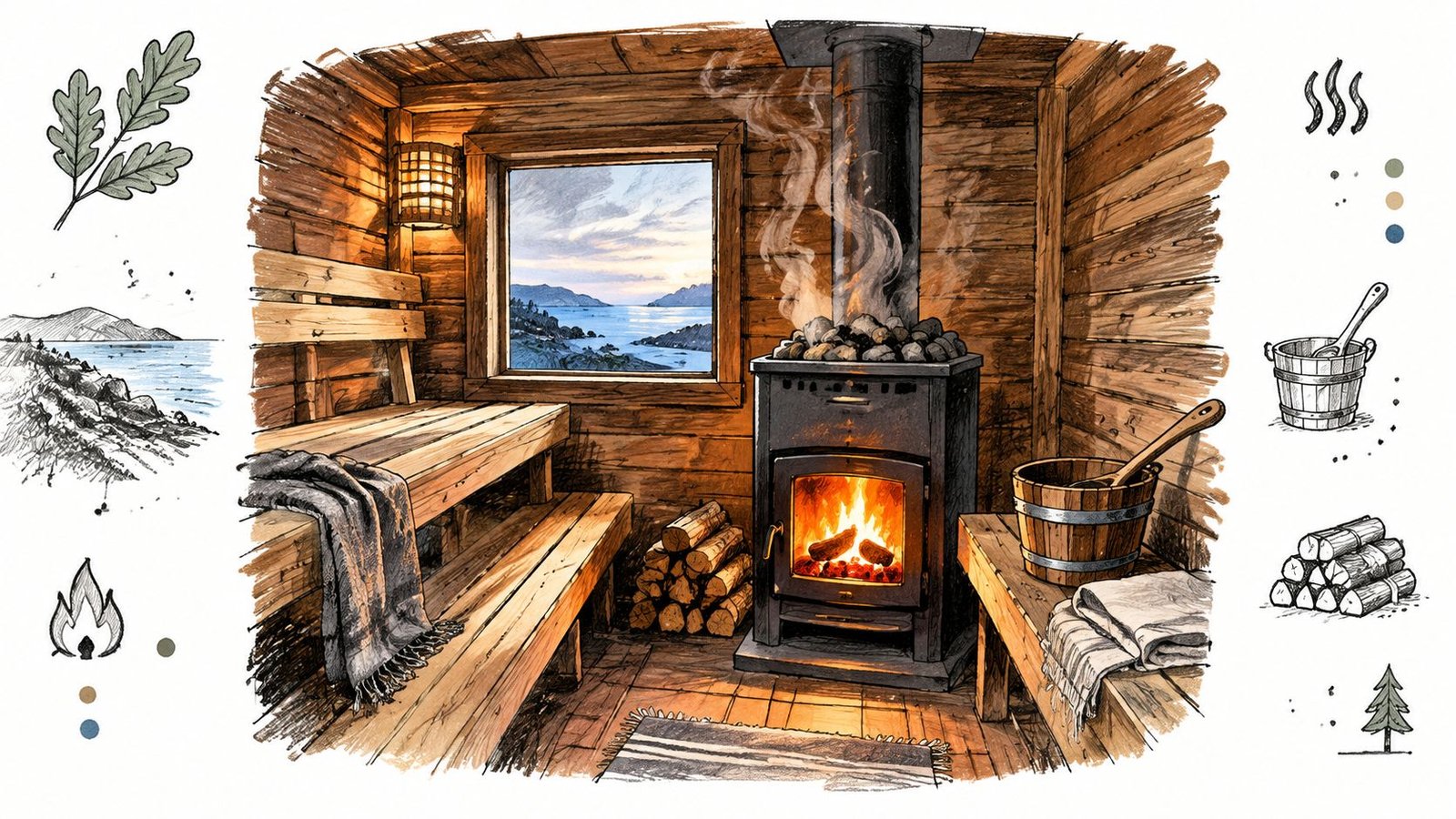
The first flame catches beneath the kindling, then settles into a steady glow. Resinous wood gives a quick crackle, the stove door warms your hands from a safe distance, and the sauna stones begin to tick as they take on heat. Outside, the garden is damp and dark. Inside, the timber slowly changes character, from cool and raw to warm, fragrant and inviting.
A first firing usually feels slower than people expect. You'll add small, dry pieces while the chimney establishes a reliable draw, then move to larger logs once the fire is burning cleanly. The room doesn't become comfortable all at once. The air warms first near the stove, the benches follow, and the stones gradually develop enough stored heat for a satisfying ladle of water.
Reading the first session
When the stones are properly heated, water poured over them creates löyly, the wave of steam that briefly makes the room feel denser and more enveloping. Start with a small amount of water. If the steam feels sharp, smoky or unpleasant, leave the room and investigate the fire, fuel and ventilation rather than adding more.
The first hour teaches you how your own sauna behaves. You'll notice where the hottest bench is, how quickly the temperature falls when the door opens and how much wood the stove needs to maintain an even session. The rest of this guide follows that same practical path, from the fire and fuel to the base, chimney, ventilation, safety routine and the Irish rules and traditions that shape outdoor use.
How a Wood Fired Sauna Actually Works
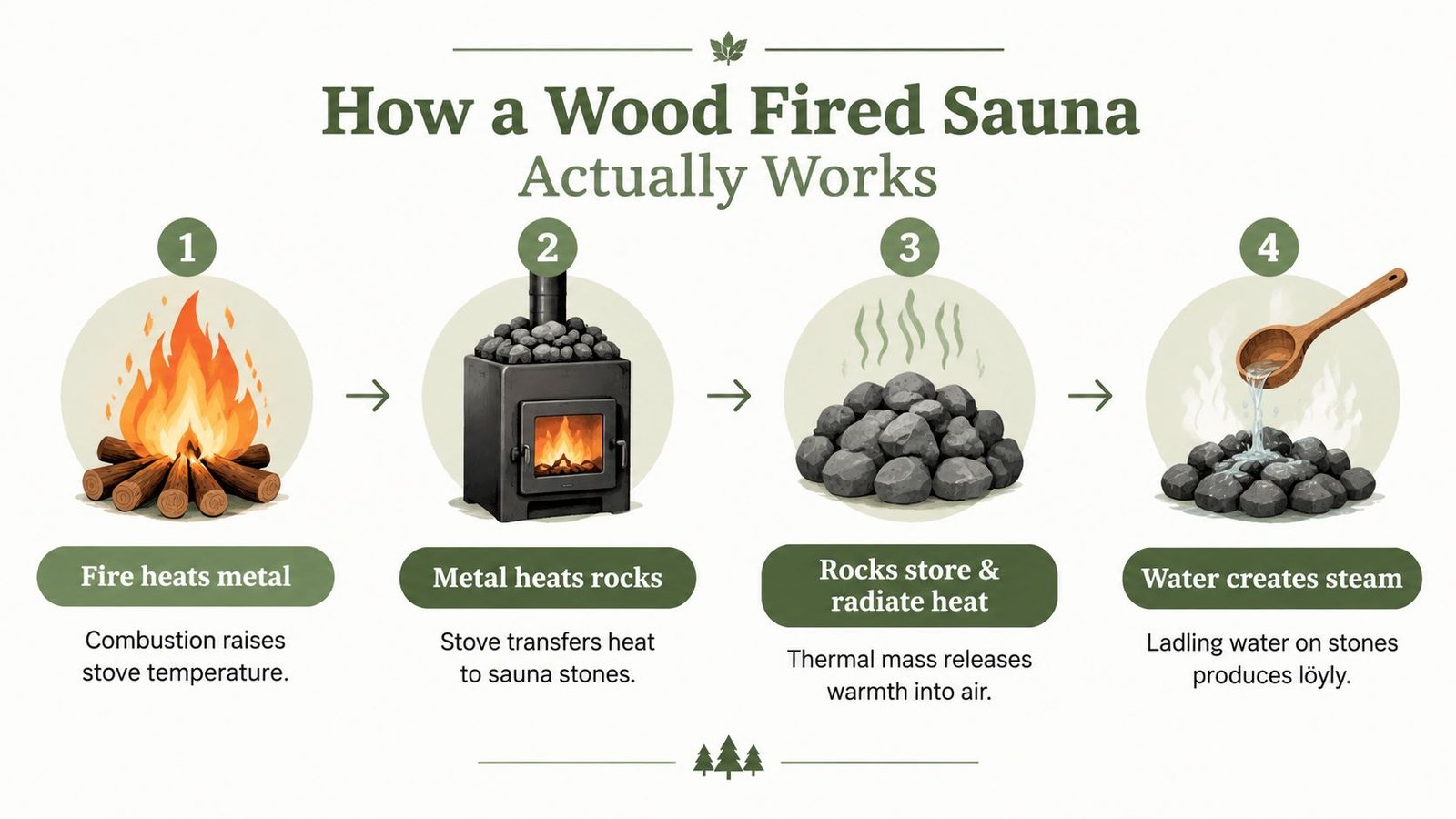
A wood fired sauna works like a kettle on a solid-fuel cooker. The fire supplies energy to the stove, the stove transfers that energy to the rocks, and the rocks store it before releasing warmth into the room. Water then changes the experience by becoming steam on the heated stones.
Four stages from flame to löyly
- Combustion heats the stove. Dry logs burn inside the firebox, producing hot gases that travel through the stove and into the flue.
- The stove heats the rocks. Metal surfaces conduct heat into the stone mass. A correctly specified stove can warm the room without forcing the fire to work beyond its intended capacity.
- The rocks store and release heat. The stones behave like a thermal battery. They radiate warmth and help keep the room pleasant between log additions.
- Water creates steam. A ladle of water on the rocks produces löyly. The resulting humidity changes how the heat feels on your skin, even though the room temperature hasn't necessarily changed by the same amount.
Why the stove, flue and rocks must work together
Stove sizing follows cabin volume. A stove that's too small struggles to heat the room and may be run too hard. One that's too large can create uncomfortable peaks, waste fuel and make fire management awkward. Follow the manufacturer's specified room range, then account for glazing, insulation and any unusually cold exposure.
Chimney draft controls the burn. Warm flue gases rise, drawing fresh combustion air into the firebox. A correctly installed chimney supports a stable flame and carries smoke away from the cabin. Poor draft can leave you with lazy flames, smoke leakage and an uneven heat-up.
The room receives both convection and radiant heat. Convection warms moving air, while radiant heat travels directly from the stove and heated surfaces towards your body. The rock mass softens the cycle, so warmth continues after the last log has been added instead of disappearing the moment the flame drops.
Best Fuels and Wood Types for Heat and Aroma
Fuel changes the personality of a sauna. Softwood gets a cold stove going quickly and brings a noticeable forest scent, while hardwood settles into a slower, steadier burn. Turf offers a different Irish character, but the choice should be guided by clean combustion and local environmental considerations rather than nostalgia alone.
| Fuel Type | Heat Output | Burn Time | Smoke & Spark | Aroma |
|---|---|---|---|---|
| Softwood, such as pine or spruce | Fast, lively heat | Shorter burn | Can spark and smoke if damp | Strong, resinous scent |
| Hardwood, such as oak, ash or birch | Steady, sustained heat | Longer burn | Generally calmer when dry | Mild, clean aroma |
| Irish turf | Moderate, earthy heat | Steady when prepared well | Can create noticeable smoke if poorly prepared | Distinctive earthy note |
Choosing logs for a clean fire
Pine and spruce are useful for kindling and early heat. Their quick response helps establish the fire, but they can burn through rapidly and throw sparks, so a stove guard and a properly closed door matter. Oak, ash and birch are better suited to maintaining a session once the stove and chimney are drawing well.
Store every fuel type under cover, off the ground and with air able to move around it. Moisture is the practical dividing line between a clean sauna fire and a smoky one. Damp logs waste energy evaporating water, produce more smoke and can leave deposits in the flue. Kiln-dried logs are convenient, while naturally seasoned timber works when it has been stored properly and is dry.
Turf can provide a traditional, earthy aroma, but it isn't automatically the cleanest option. If you use it, choose well-prepared, low-moisture briquettes and confirm that the stove manufacturer permits that fuel. Never add unfamiliar treated timber, painted boards, laminated offcuts or household waste. Those materials can release harmful compounds and damage the stove or flue.
The cabin's interior finish also affects the atmosphere. Timber cladding with a stable, low-resin surface gives the room a calm appearance and helps protect the wall build-up when correctly installed. For a cedar finish, see this practical guide to cedar wood cladding.
Installation, Base, and Ventilation Requirements
A sauna should sit like a small building, not like a heavy garden box dropped onto soft ground. Start by choosing a level location with reliable drainage, practical access for fuel and enough room to inspect the chimney and exterior walls. A site that looks flat after rain can still hold water beneath the floor, so check how runoff moves before you prepare the base.
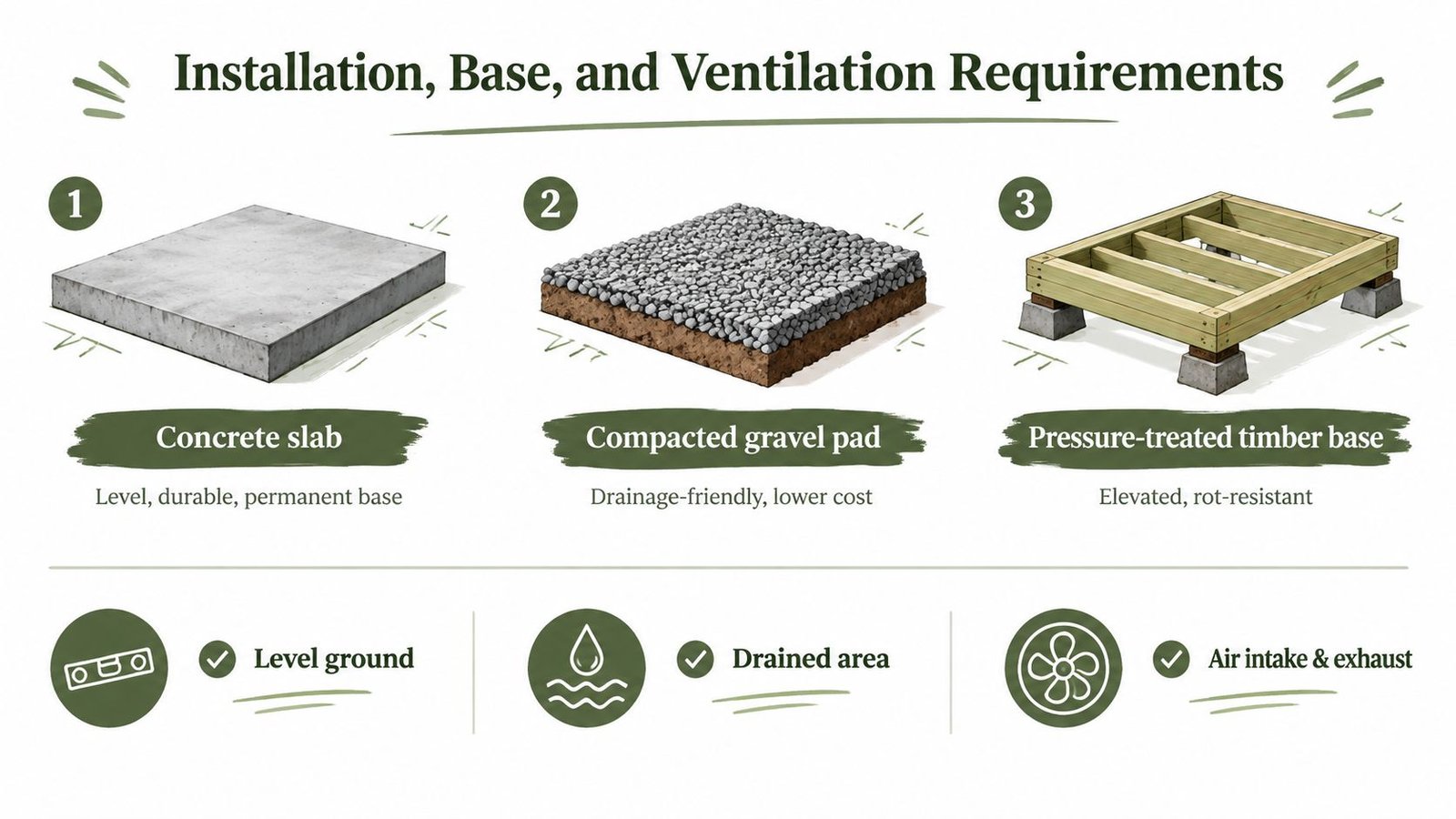
Three sensible base choices
- Concrete slab. This gives a durable, level and permanent platform. It suits heavier cabins and simplifies precise placement, but it requires more preparation and can make the installation feel less movable.
- Compacted gravel pad. Properly edged and compacted stone drains well and can be a cost-conscious solution. It must be built evenly, because settlement beneath one corner will twist the floor and doors.
- Pressure-treated timber base. A raised timber frame keeps the floor clear of wet ground and can work well on a suitable prepared surface. Use rot-resistant materials and ensure the frame is supported continuously rather than resting on a few isolated points.
Place the cabin with the stove in mind
Set the sauna far enough from fences, walls, sheds and other combustible surfaces to meet the stove, chimney and building instructions. The manufacturer's clearance schedule takes priority over a convenient-looking gap. A stove guard protects bathers from accidental contact, but it doesn't replace the required distance from timber or other heat-sensitive materials.
The chimney needs a safe route through the roof, weatherproof flashing and enough height to draw properly and discharge smoke clear of nearby obstructions. Boundary conditions can become more complicated when the chimney sits close to a neighbour's fence, roof or window. Ask the stove supplier or a competent installer to confirm the arrangement before cutting the roof.
Ventilate low and exhaust high
Fresh air should enter near the lower part of the room, while warm, used air leaves through a higher outlet. That arrangement encourages air to wash across the bather rather than stagnate in the hottest ceiling pocket. The exact opening size and position should follow the stove and cabin instructions, especially where the sauna is a sealed insulated structure.
Leave access for cleaning, inspection and firewood handling. A larger base can improve stability and drainage, but it also increases material use and may affect how the structure is viewed under Irish planning rules. For a suitable outdoor model and site-planning starting point, review the outdoor sauna range for Ireland, then confirm the final specification with the supplier and your local authority.
Real Benefits of Choosing Wood Over Electric
The strongest argument for a wood fired sauna isn't that it creates a special health effect. Heat exposure comes from the session itself, not from romanticising the fuel. The difference is how the sauna fits your routine, your site and your preferred relationship with heat.
Wood gives the room a gradual, layered warmth. The stove heats the stone mass, and those stones continue radiating after the fire has settled. Many users prefer that softer transition to the instant, precisely controlled response of an electric heater.
What wood does well
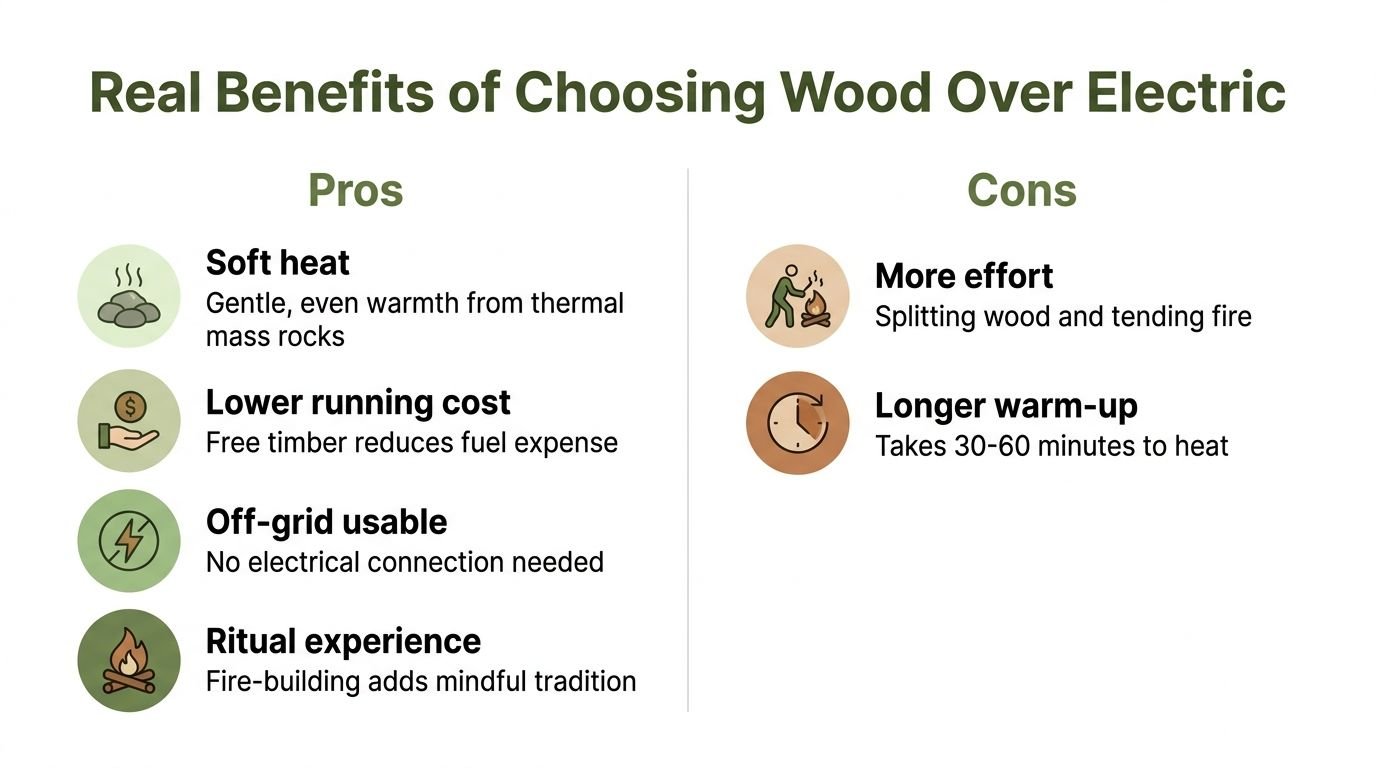
- Soft heat: A well-loaded rock basket produces an even sensation, with steam that feels rounded rather than abrupt when water is added correctly.
- Off-grid flexibility: A wood stove doesn't need an electrical connection to produce heat, which can suit a remote garden, coastal site or retreat setting.
- Ritual and pace: Splitting kindling, checking the draw and feeding the fire turn preparation into part of the experience rather than an invisible prelude.
- Potentially lower fuel expense: If you have a dependable supply of suitable free timber, the running cost can be lower than buying all your heat from a paid energy source. That advantage disappears if fuel must be purchased, transported and stored at a premium.
The trade-offs are part of the decision
Wood takes longer to prepare and heat. You'll remove ash, store logs, watch the fire and accept that one session may feel different from the last. Electric heating offers easier scheduling, cleaner in-room operation and fine control, which can matter if you want a short session before work or have limited tolerance for smoke-related variables.
That doesn't make one system universally superior. It makes them different tools. An electric sauna may suit a homeowner who values repeatability, while a wood fired sauna suits someone who wants the garden visit, the firelight and the slower arrival at full heat. If you're weighing both options, compare the outdoor experience with an infrared sauna option in Ireland rather than assuming every sauna delivers the same kind of warmth.
Safety and Maintenance for Outdoor Use
A wood fired sauna isn't safe because it looks rustic, and it isn't dangerous because it contains a fire. Safety comes from a repeatable routine that controls heat, smoke, combustion and contact with hot surfaces.
The checks that protect the cabin
- Before lighting: Inspect the stove door, firebricks, guard rail and chimney connection. Keep the area around the stove clear of towels, clothing, oils and loose timber.
- During heating: Use dry fuel, add manageable loads and watch for smoke entering the room. A carbon monoxide alarm suitable for the setting adds an important layer of warning, but it doesn't replace correct installation and ventilation.
- During bathing: Keep the water bucket stable and away from the stove door. Use a proper ladle, place your feet securely and don't touch the stove or flue.
- Before leaving: Let the fire die down safely, deal with embers according to the stove instructions and never leave a live fire unattended or burning while you sleep.
A maintenance rhythm that stays manageable
Remove ash regularly, because a deep ash bed can restrict airflow and make ignition harder. Check the chimney and flue for soot or deposits on a routine suited to your fuel and use. If the draw changes, smoke begins to linger or the fire burns unusually slowly, stop using the sauna until the cause has been checked.
Inspect benches, fixings and the stove guard annually, or sooner if anything loosens or splits. Treat exterior cladding with a breathable timber oil or approved finish, following the product instructions. Avoid sealing moisture into the timber with an unsuitable coating.
Practical rule: A few deliberate checks before each session prevent far bigger problems than a rushed repair after smoke, water or heat has damaged the cabin.
Keep maintenance visible and simple. A small ash shovel, metal bucket, stove brush, torch and inspection checklist are more useful than a cupboard full of products you never use. The aim isn't to eliminate every task. It's to make each task familiar enough that you notice a change before it becomes a hazard.
The Irish Sauna Tradition and Where to Go Next
Ireland's sweat-house tradition gives the modern outdoor sauna a meaningful local context. The historic structures described in Irish coverage were small stone chambers heated by fire. Stones were warmed for hours, ashes were removed, and the bather entered the heated space to sweat. The materials have changed, but the central pattern remains recognisable, heat a compact room, sweat intensely for a short period, then recover.
Modern cabins use milled timber, insulated wall systems, purpose-built stoves and engineered chimneys. You'll now find wood fired saunas associated with gardens, coastal retreats, glamping sites and public wellness businesses. A 2026 industry summary reported at least 242 independent saunas operating in Ireland, with around 90% opening after 2020 and more than half launching in 2025 alone (Sauna News market summary). The same report said roughly 40% of new public and commercial installations in 2024 used solar thermal or locally sourced biomass, showing why renewable heat is part of the current conversation.
Cold water needs more respect than bravado
Ireland's sea and lake water can make the contrast tempting, particularly after a hot session. A brisk plunge or cold shower may feel invigorating, but sudden temperature change can make dizziness and loss of control more likely. Irish water-safety guidance emphasises acclimatisation, controlled entry and supervision, while recent reporting has highlighted the need for clearer advice around dehydration, dizziness and alcohol avoidance as sauna and sea-swimming interest has grown (Irish reporting on sauna safety and popularity).
Don't treat a very cold swim as a test of toughness. Cool down gradually, enter controlled water slowly, avoid alcohol, have another adult present and stop if you feel faint, confused, unusually breathless or unwell. Anyone with heart or blood-pressure concerns, and anyone who is pregnant, should ask a clinician before using intense heat or contrast bathing. You don't need extreme cold to complete a safe sauna routine.
Plan the permission question early
The right permission depends on the site and the way you'll use it. A private fixed garden sauna, a mobile unit on a coastal pitch and a commercial sauna offered to paying customers can fall under different planning, trading, fire-prevention and environmental requirements. Irish councils have been moving towards permits, designated pitches, operating-hour conditions, fire rules and environmental checks for sand or beach locations, so ask which permission applies where rather than relying on a general yes-or-no answer (Irish Times coverage of mobile sauna regulation).
Your practical next steps are straightforward. Measure the site, confirm the base, check local planning requirements, choose a stove sized for the cabin and arrange safe chimney installation. If you're uncertain, book a session at a public wood fired sauna first. You'll learn more about bench height, löyly, ventilation and the pace of a real firing than a brochure can tell you.
TimberLodge365 supplies outdoor sauna cabins for garden and spa-style backyard use, with standard and bespoke timber-building options for sites across the Republic of Ireland. Visit TimberLodge365 to review the outdoor sauna range, base requirements and installation options, then discuss a specification that suits your garden and the way you plan to use it.